Travel Booking Engine Architecture: How the Five Layers Work and Where Each One Breaks
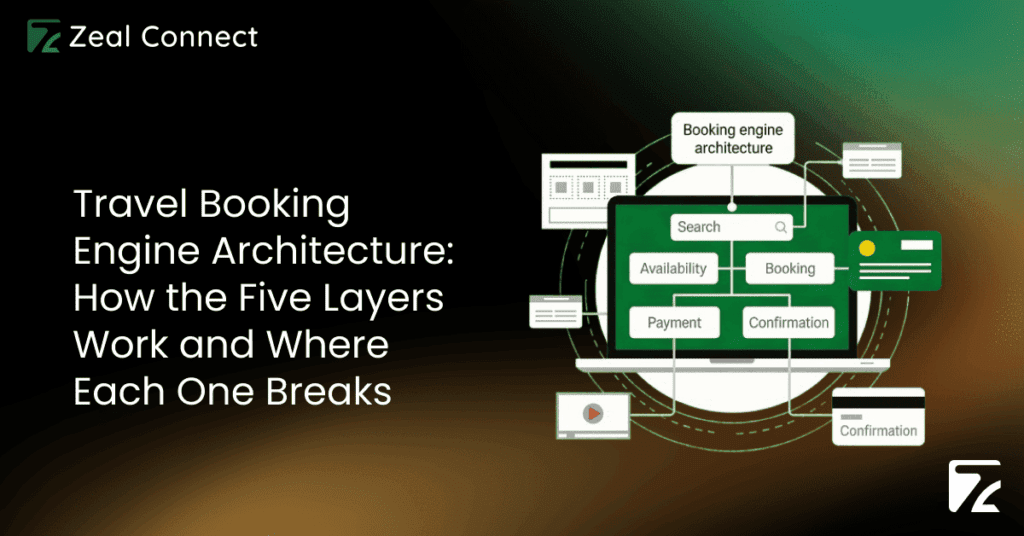
TL;DR A travel booking engine is not one system it is five architectural decisions stacked on each other, where a flaw in any single layer cascades into all the others. For OTA and travel agency leaders, the cost of an under-engineered engine shows up in checkout abandonment, supplier confirmation failures, and operations costs that compound silently. This guide maps each layer, names the failure points, and frames what a platform built for 2026 actually needs. What Is a Travel Booking Engine Architecture and Why Does Every Platform Decision Start Here? Most booking platform failures do not announce themselves. A rate that will not confirm at checkout. A guest at check-in with a booking reference the hotel has never seen. A checkout that loses nine in ten users before payment clears. These look like isolated incidents. They are not. They are architectural symptoms each one traceable to a specific layer of the platform. A travel booking engine is the software infrastructure that manages the full transaction lifecycle querying live inventory across supplier connections, applying pricing and business rules, managing the booking session, processing payment, and reconciling supplier-side confirmation. It is five interdependent layers operating in sequence, where a failure at any one layer does not stay contained. Every commercial decision your OTA makes is only as executable as the architecture beneath it allows. You cannot enforce per-agent markup logic if the pricing layer was not designed to support it. You cannot expand into cross-border markets if the payment layer cannot handle local payment methods. The architecture of a travel booking engine is the infrastructure of every revenue decision your business makes, and every operational cost your team absorbs. Layer 1 is where the architecture either begins building a complete, accurate inventory picture or starts accumulating gaps that no downstream layer can correct. Layer 1 : How Does a Travel Booking Engine Query Supplier Inventory in Real Time? The moment a traveler hits search, the architecture either delivers, or it does not. What happens in the next four seconds determines whether they see accurate, complete, priced results or something that costs you the booking. Key Terms Worth Knowing NDC (New Distribution Capability) : An IATA XML-based standard enabling airlines to distribute richer content including ancillaries, dynamic pricing, and personalised fare bundles directly to OTAs and travel agencies, independent of legacy GDS fare-filing constraints. API Gateway : The connectivity layer inside a travel booking engine that manages simultaneous outbound API calls to multiple supplier systems, aggregates responses, and applies fallback logic when any connected source fails or times out. Adaptive 3DS (Three-Domain Secure): A payment authentication architecture that applies challenge flows proportionally to transaction risk profile rather than universally preserving conversion on low-risk sessions while protecting high-risk ones. Reconciliation Layer :The architectural component that monitors supplier-side confirmation receipt against engine-side booking references, automatically flagging discrepancies when a supplier’s acknowledgement has not arrived within a defined window. Why Does a Single GDS Connection Put the Entire Booking Engine at Risk? The engine fires parallel API calls simultaneously across every connected supplier GDS providers, bed bank feeds, NDC connections, and direct APIs. A platform built on a single GDS connection has one point of failure. If that feed goes down, the engine returns nothing, not a partial result; nothing. Redundancy and fallback logic at the API gateway is the minimum viable design for a platform that cannot afford silence during peak windows, as noted by Onix Systems, Mar 2026. The same hotel appears across multiple supplier feeds simultaneously with different property IDs, different rate formats, and different content schemas. Content mapping logic must resolve all inconsistencies before results reach the display layer. When it fails, travelers see duplicate listings and rates the supplier will reject at checkout. What Does NDC Connectivity Change at the Data Layer and What Are OTAs Missing Without It? NDC is not a distribution update. Adding NDC connectivity changes the data payload at the query layer itself. Where a GDS response returns EDIFACT-structured fare data, an NDC response delivers a richer offer fare plus ancillaries, seat options, and dynamic pricing constructed by the airline in real time. The engine’s content mapping layer must be built to parse this format, or the content is discarded silently. NDC now accounts for 21.2% of total ARC-settled transactions as of December 2025, according to Travel Weekly, Jan 2026. OTAs without NDC connectivity are operating with a structurally incomplete inventory picture against competitors who are not. Once inventory has been queried and results returned, the architecture hands the problem to Layer 2 turning raw supplier data into a priced, ranked, and margin-aware display. This is where commercial strategy meets system design. Layer 2 : How Does Pricing Logic Inside a Travel Booking Engine Determine Margin? Before a single result reaches the traveler’s screen, the pricing engine has already applied markup rules, commission logic, supplier rankings, and in a B2B context agent tier and credit checks. This is where revenue strategy is encoded in the architecture. Get this layer wrong and the consequences show up in conversion rates, not error logs. Why Is the Caching vs. Live Pricing Trade-Off a Revenue Decision, Not a Technical One? Cached pricing returns results faster. Live pricing returns them accurately. A rate cached 15 minutes ago may not reflect what the supplier will confirm at checkout. The gap between displayed price and confirmed price is one of the most consistent drivers of booking abandonment after payment initiation. Rate discrepancies are an architectural symptom. They originate in the pricing layer and are delivered downstream to the customer as a broken experience. Why Can B2B and B2C Travel Booking Engines Not Share the Same Pricing Architecture? A B2B pricing engine must simultaneously manage net fare display per sub-agent tier, individual markup rules per agent profile, credit limit enforcement across concurrent sessions, and wallet-based settlement. These are business rules encoded inside the engine not configuration options. A B2C engine retrofitted with B2B modules cannot enforce session-level credit limits reliably at volume. DMCs and wholesale operators running sub-agent networks encounter this failure in production with direct financial consequence. B2B pricing architecture must be designed in not bolted on as confirmed by HFTP / Hospitalitynet, Dec 2025. Pricing logic can be excellent, and the query layer is perfectly redundant, but if Layer 3 is poorly engineered, neither advantage reaches the guest at checkout. Layer 3 : What Happens Between Product Selection and Payment in a Travel Booking Engine? Most booking failures that surface at check-in
How Top OTAs Evaluate Booking Engine Software: A Practical Vendor Scorecard
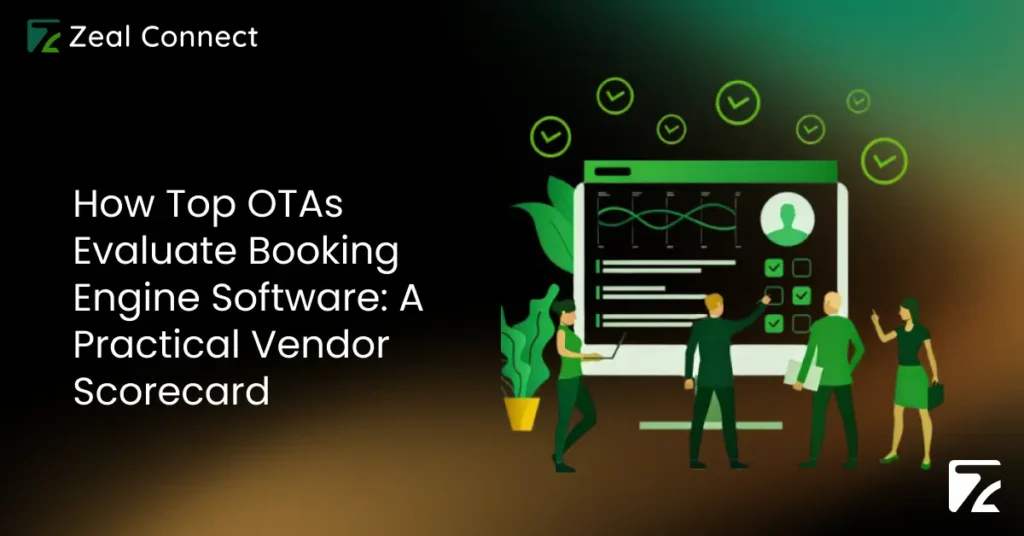
TL;DR Most OTAs evaluate booking engine software the wrong way letting vendors lead the demo and checking features off a list. The platform that looks best in a 90-minute presentation is rarely the one that performs best at production volume. This guide gives OTA managers and travel agency owners a seven-dimension vendor scorecard to evaluate platforms on the criteria that actually predict revenue and operational performance. The Vendor Demo Looked Great. So Why Did the Platform Fail? Every OTA manager has a version of this story. The demo ran smoothly. Clean interface, fast checkout, and a B2B portal with tier management. Compelling case studies. The contract got signed. Three months after go-live, the gaps appeared. Inventory revalidation failed at peak hours. B2B tier setup required a support ticket and a five-day wait. API documentation referenced deprecated endpoints. Support responded to critical failures with a form email. None of this showed up in the demo. It never does. OTAs evaluate platforms on the vendor’s terms, watching a curated presentation rather than probing operational reality. A vendor-led demo is a marketing exercise. A structured scorecard is an evaluation tool. Same platform. Very different outcomes. The OTAs that make strong platform decisions are the ones that walk into a demo already knowing exactly what they are measuring. According to Phocuswright’s Global Travel Market Report 2025, global travel gross bookings reached $1.6 trillion in 2024 and are projected to approach $1.8 trillion by 2027, with online bookings growing 9% that year (PhocusWire, 2025). The infrastructure powering that volume is not a background function. It is the business. Booking engine software for an OTA is the platform that searches live supplier inventory, applies dynamic pricing and markup rules, processes customer payments, and manages the full post-booking workflow reconfirmation, voucher delivery, and modification handling , without manual intervention. For a hotel, the scope is narrow: capture direct reservations. For an OTA, the platform is the entire distribution operation. Key Terms Worth Knowing Booking engine software: The distribution platform enables an OTA or travel agency to search supplier inventory, apply dynamic pricing and markup, process bookings, and manage post-booking workflows in one connected system. Inventory revalidation: The process of confirming in real time that a rate and room shown to a traveler during search is still available and correctly priced at the moment of booking confirmation. API documentation: The full technical reference describing a platform’s programming interfaces including endpoint specifications, request formats, authentication methods, response structures, and versioning policy. Support SLA: A contractual commitment from a software vendor defining specific response and resolution time targets for platform issues, categorized by severity; not a stated policy, a signed obligation. Why Are Feature Lists the Wrong Way to Evaluate Booking Engine Software? Where most OTA software selection decisions break down is the gap between a feature existing and a feature performing. A platform may support dynamic pricing not that markup recalculates live during peak traffic, or updates without a developer ticket. It may support B2B portals not that an OTA can onboard a new tier and set credit limits without a consulting engagement. The feature list confirms the presence. The vendor scorecard probes performance. What Does Poor OTA Software Selection Actually Cost? The Amadeus Travel Technology Investment Trends 2024, a survey of 150 senior OTA leaders found that 72% of OTAs are investing in new booking capabilities, with the sector planning an average 13% increase in technology spend (Amadeus, 2024). When the sector is moving at that pace, choosing the wrong platform does not just waste the budget it sets the OTA back while competitors who chose correctly are pulling further ahead. Switching after a failed go-live costs in three places: the sunk contract investment, the cost of running a broken system during replacement, and lost revenue during a degraded transition. Buying the wrong booking engine software is not a technology mistake. It is a revenue mistake that surfaces slowly and compounds before anyone names it. Which Seven Dimensions Actually Predict Booking Engine Software Performance? The OTA Vendor Evaluation Scorecard measures what vendors can demonstrate live, under conditions that reflect how an OTA actually operates. Score each vendor 1–10 per dimension: 1–3: Missing, broken, or underdeveloped for OTA-scale operations. 4–6: Exists with gaps: limited conditions, workarounds, or professional services required .7–9: Solid and demonstrated with minor limitations. 10: Fully demonstrated live, no caveats. Maximum total: 70. Below 45: Critical gaps that will surface as failures post-go live. Remove from shortlist. 45–59: Strength’s present but unproven at your scale. Request a proof of concept before signing. 60 and above: Performs well across all dimensions. Proceed commercial negotiation. Does the Platform Query Inventory in Real Time or Serve Cached Data? Real-time inventory means the platform queries supplier APIs at the moment of search. Cached inventory means it queries in batches and serves pre-stored data. The gap surfaces at checkout a traveler sees a cached rate, payment processes, and the room is gone, or the price has changed. “Inventory discrepancies between search and confirmation are the leading cause of post-booking operational failure for OTAs. The damage is invisible in a demo and immediate in production.” Ask every vendor: what is the cache refresh interval? Request a live API call during the demo. A vendor who will not run one already knows the answer. Can the OTA Build a Full B2B Sub-Agent Layer Without Developer Involvement? A booking engine platform’s B2B module determines whether the OTA can onboard sub-agents with independent credentials, assign tiered markup controls per tier, and enforce credit limits at booking level all without involving a developer. Platforms that offer this convert the OTA into a distribution hub where every agent’s tier generates revenue without additional marketing spend. Platforms that require professional services to configure agent tiers are not built for OTA-scale distribution. “An OTA that cannot activate its B2B layer is leaving a second revenue engine switched off. Every week without it is distribution volume that goes to a competitor who built that infrastructure.” The B2B sub-agent architecture is not a feature. It is the structural difference between a travel agency and a distribution business. Test it: can an operations manager onboard a new tier, configure markup, and set credit limits without a developer ticket? Does the Checkout Flow Hold Conversion at the Final Step? Checkout is where traffic becomes revenue or abandonment. Test it live in every demo. The Hilton and Ipsos 2024 Trends Report found that
How B2B Travel Booking Engines Power Agent Networks and Wholesale Travel Distribution
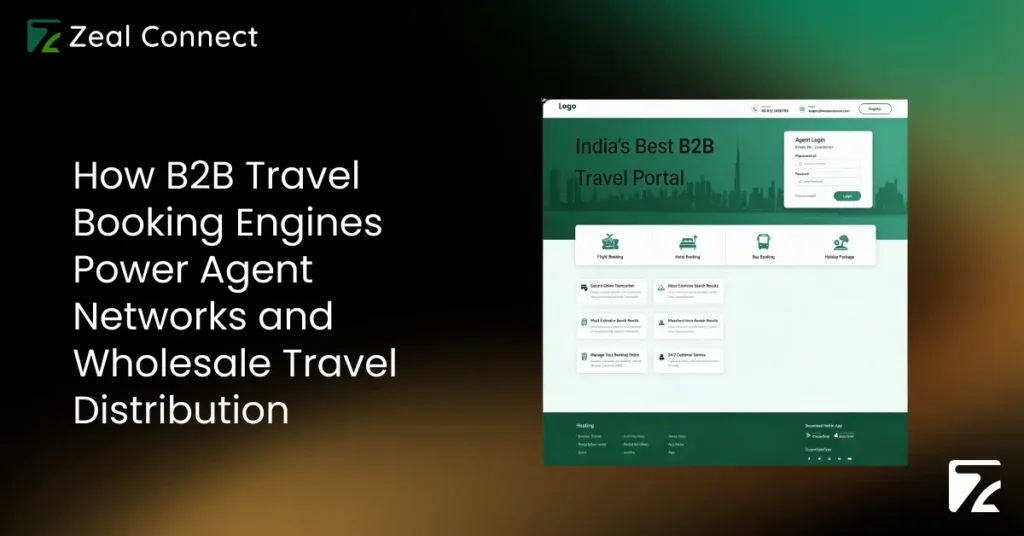
TL;DR A B2B travel booking engine is the infrastructure that connects travel agencies, OTAs, and DMCs to wholesale inventory and distributes it through tiered agent networks with pricing, credit, and commission rules applied automatically at every level. Without one, wholesale distribution becomes a manual operation that leaks margin, creates pricing inconsistencies, and cannot grow beyond a handful of partners. This guide explains how the engine works, how it connects to wholesale inventory, and why the shift to API-first distribution makes the platform decision more consequential than ever. What Is a B2B Travel Booking Engine? A B2B travel booking engine is a platform that connects travel businesses :OTAs, agencies, and DMCs to live inventory sources and distributes that inventory through a managed network of agents and sub-agents. Unlike B2C platforms built for end consumers, it operates on wholesale rates, enforces per-agent pricing rules, and processes bookings on behalf of business clients rather than individual travellers. The distinction matters commercially. A B2C engine shows every visitor the same retail price. A B2B travel booking engine applies a different commercial logic to every tier in the network automatically, at the point of search, based on rules the principal configured once. That difference in architecture is the difference between a booking interface and a wholesale distribution business. The engine has three interdependent layers: the agent network it structures, the pricing logic it enforces across that network, and the inventory it connects to. Each layer depends on the others. Understanding how they fit together is the starting point for understanding why the platform choice is a strategic one, not just a technical one. How Does a B2B Travel Booking Engine Power Tiered Agent Networks? A B2B travel booking engine powers tiered agent networks by creating a structured hierarchy of principals, agents, and sub-agents and automatically applying the correct pricing, credit, and commission rules to every booking at every level, without the principal managing individual transactions. According to Phocuswright’s Global Travel Market Report 2025, the global travel industry reached $1.6 trillion in gross bookings in 2024 and is on course to approach $1.8 trillion by 2027. Behind that volume is a distribution structure most travellers never see a tiered chain of principals, agents, and sub-agents, each accessing inventory from the tier above and reselling it to the tier below. This structure is the commercial engine of wholesale travel. It allows a single agency to multiply its booking output far beyond what its own team can produce. But it only functions when the rules governing every relationship are enforced consistently. Key Terms Worth Knowing B2B Travel Booking Engine: A distribution platform connecting travel businesses to wholesale inventory and managing the flow of bookings through a tiered agent network, with pricing, credit, and settlement rules enforced automatically. Travel Distribution Platform : The technology layer connecting inventory suppliers with travel sellers, managing rates, availability, booking confirmations, pricing rules, and financial settlement across the distribution chain Markup : The percentage a travel agent adds to a wholesale net rate before presenting the final price to the client, representing the agent’s margin on the transaction. Bedbank: wholesale accommodation supplier that negotiates hotel room inventory at net rates and redistributes it to OTAs, travel agencies, and tour operators via API. What Agent Hierarchy Does a B2B Travel Booking Engine Create? At the top sits the principal, the agency owner or OTA operator who holds supplier contracts and controls inventory access. Beneath them sit agents: partners who book on behalf of their own clients using the principal’s inventory, within the pricing the principal has defined. Below those agents are sub-agents: smaller operators, regional resellers, or independent advisors who access inventory through the agent above them. When a principal configures a B2B travel booking engine, they build this architecture directly from the admin panel. They create agent accounts. They set access levels. They assign credit limits; the maximum outstanding balance an agent can carry before settlement is required. They define markup rules per agent group, per product type, per season. The agent logs in and books within those parameters. Pricing is pre-applied. The inventory is live. Confirmation arrives instantly. Five agents, each managing three sub-agents, each making ten bookings per month; the engine is processing 150 bookings without a single additional staff member. That is the compounding revenue logic of agent network depth, and it comes entirely from infrastructure. What Breaks When an Agent Network Runs Without a B2B Travel Booking Engine? Without a B2B travel booking engine, agent networks default to manual distribution: rates negotiated over WhatsApp, pricing adjusted per inquiry, different agents receiving different prices for the same product. Invoices are created outside the booking record. Credit exposure accumulates faster than it can be tracked. Month-end reconciliation consumes days. The commercial cost is measurable. Phocuswire reported in February 2025 says that Expedia’s B2B revenue grew 21% in 2024, reaching $4.1 billion making it the company’s fastest-growing segment, against total group gross bookings of $111 billion. That growth does not happen through manual distribution workflows. It happens through infrastructure that removes every friction point between an agent’s decision to book and a confirmation landing in their inbox. How Does a B2B Travel Booking Engine Handle Wholesale Pricing and Net Rates? The agent network creates the structure. But structure without pricing rules is just an org chart. What makes the network commercially valuable is the pricing logic the engine enforces automatically across every tier so that the principal’s margin is protected whether there are five agents or five hundred. A B2B travel booking engine handles wholesale pricing by applying different markup rules to different agent tiers automatically at the point of search, so every agent sees the correct price for their commercial relationship, and the principal’s margin is protected at every level without manual intervention. Net Rates vs Rack Rates: How a B2B Travel Booking Engine Applies Wholesale Pricing A rack rate is the publicly available price a consumer sees on a B2C platform. A net rate is a confidential wholesale price lower than the rack rate offered to trade partners who apply their own markup before presenting a final price to the client. The markup is the agent’s margin. The net rate is what the agent pays the supplier. According to DMCquote’s agent commission rates guide, hotels typically offer 15–25% on net rates with luxury products
10 Signs Your Booking Engine Software Is Limiting Your OTA’s Growth

TL;DR Most travel agencies that hit a growth plateau look outward first; more ad spend, better creative, a new channel. The problem is almost never there. When traffic grows but revenue does not, when average booking value stays flat in a market where margins are already under pressure, or when your best people spend peak season firefighting instead of selling, the booking engine is almost always where growth has stalled. This guide gives OTA managers and agency owners the 10 revenue-visible signs to look for and what each one is actually telling you. At some point, every OTA owner has the same conversation with themselves. The traffic numbers look good. The pipeline is active. The team is working. But the revenue line is not moving the way everything else suggests it should. The first instinct is to look outward ; more spend, better targeting, a new acquisition channel. And six months later, nothing has changed, because the problem was never upstream of the booking. It was inside it. According to Skift Research’s March 2026 global OTA market estimates, the OTA market is projected to reach $107 billion by 2026, growing at a steady 7%. That growth is available to every agency in this market. The ones not capturing it are rarely losing to better marketing. They are losing to better infrastructure. What Is Booking Engine Software and When Does It Become a Growth Constraint? Booking engine software is the technology layer that connects a travel agency’s sales channels to live supplier inventory automating search, pricing, payment, and confirmation in real time, without a staff member in the middle of every transaction. It is not a support tool. It is the commercial engine through which an OTA competes. And like any engine, it has a working range. The business that has grown past that range is not facing a marketing problem or a pricing problem. It is running at full load on a platform built for a smaller version of itself. Key Terms Worth Knowing Booking Engine Software : The technology layer automating search, pricing, payment, and confirmation between a travel agency’s sales channels and live supplier inventory in real time. Look-to-Book Ratio : The number of availability searches made for every confirmed booking; a declining ratio indicates pricing gaps, checkout friction, or inventory unavailability inside the engine Mobile-First Architecture: A booking engine designed from the ground up for touch navigation and fast mobile load times, as distinct from a mobile-responsive design that adapts a desktop interface. B2B Sub-Agent Portal : A branded, access-controlled section of a booking engine that allows partner agents to search, book, and manage inventory at pre-agreed rates with independent markup controls per tier. How Does Failing Booking Engine Software Destroy Conversions You Have Already Paid to Earn? Here is what rarely appears in a marketing report: the cost of traffic that arrives ready to book and leaves without completing a transaction. Ad spend gets attributed to clicks and sessions. What it rarely gets attributed to is the checkout experience those sessions land in. Every traveller who searched, compared, entered their details, and then abandoned , that is a cost the acquisition budget absorbed and the booking engine failed to convert. Sign 1: Why Does Revenue Stay Flat When Your Booking Engine Software Is Seeing More Traffic? Traffic growing and revenue not following is a specific kind of problem. It tells you the demand is there. Travellers are arriving with intent. Something inside the journey is breaking that intent before it becomes a booking. Contentsquare’s 2026 industry analysis found that travel and hospitality sites convert at just 2.7% on average and on mobile, that drops to 2.1% against 4.5% on desktop. The gap is not random variation. It is the measurable cost of friction that should not exist: slow search results, pricing that has not refreshed since the traveller started browsing, a checkout flow with one unnecessary step built into it. None of this shows up in a paid media dashboard. All of it shows up in the distance between sessions and confirmed revenue. When those two numbers are pulling in different directions, the checkout architecture is almost always where the answer is found. An agency that pays to acquire traffic and then loses it inside a broken checkout is not facing a marketing efficiency problem it is funding a leaking bucket. Sign 2: Why Are Mobile Visitors Converting at Half the Rate of Desktop Users? Prostay’s January 2026 hotel booking statistics report projects mobile-first booking at 75% of all OTA transactions by 2026. For most agencies, mobile is no longer a secondary channel. It is the channel. There is a meaningful commercial difference between a mobile-responsive booking engine and a mobile-first one. The first reshapes a desktop experience for a smaller screen. The second was built for a traveller navigating with their thumb, on a connection that is not always fast, in a moment that is not always patient. When that traveller hits a checkout designed for desktop, they do not complain. They leave and that departure costs the agency the full value of everything that brought them there. Sign 3: Why Do More Bookings Fail at Payment Than at Any Earlier Stage of the Flow? This is the one that stings the most because the traveller was committed. They searched, compared, selected, and entered their details. Then something in the payment layer broke the transaction. Checkout.com’s 2025 payments performance research puts average cart abandonment across OTA platforms at approximately 81%. A disproportionate share of that happens at payment , not because travellers changed their minds, but because the engine gave them no way to complete. A fraud filter that rejected a legitimate card. A redirect to an unfamiliar processor. A payment method the traveller uses every day that the platform simply did not offer. Every one of those is a recoverable failure. None of them are being recovered if the engine does not surface them. The agencies capturing the growth in this market are the ones whose
Why Every Travel Agency Needs Booking Engine Software
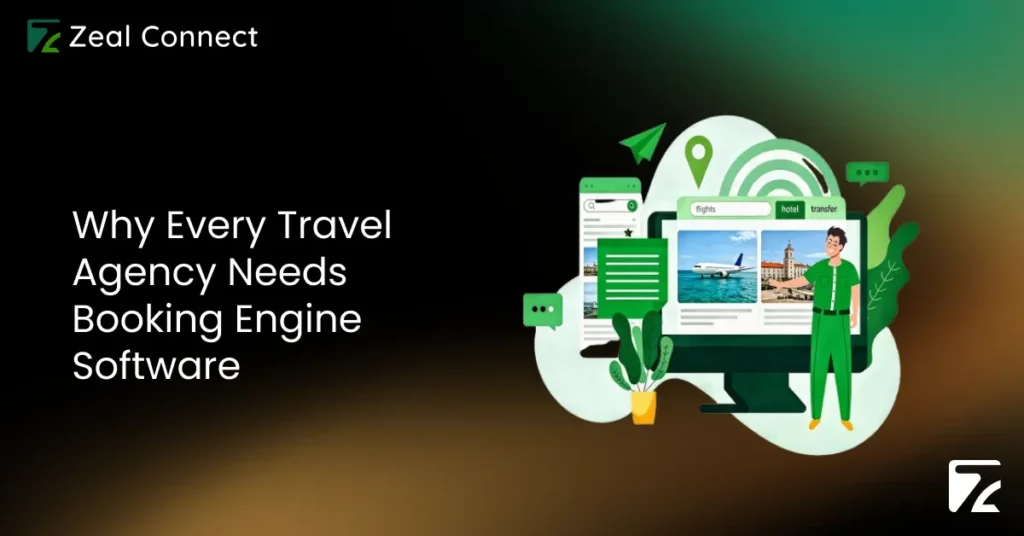
TL;DR Travel agencies are not losing bookings because of price , they are losing them because their booking engine creates friction that travelers will not push through. This blog breaks down what booking engine software actually does for a travel agency, why operating without it costs more than most owners realise in staff time, errors, and ceded digital revenue, and how to choose a platform that fits your distribution model, unlocks your B2B sub-agent channel, and stays visible as AI reshapes how travelers search and book. What Is Booking Engine Software? Most agencies think they have a booking engine. What they usually have is a form. Booking engine software is the infrastructure that connects a travel agency’s sales channels to live supplier inventory , flights, hotels, transfers, and packages and confirms, prices, and validates reservations in real time, without a staff member involved in every transaction. How Does Booking Engine Software Turn Agency Traffic Into Confirmed Bookings? Most travel agencies do not have a traffic problem. They have a conversion problem. Visitors arrive, browse, compare and leave. The instinct is to blame price. The data says otherwise. Key Terms Worth Knowing GDS (Global Distribution System):l: A centralised network including Amadeus, Sabre, and Travelport, that connects travel agencies to real-time airline, hotel, and car rental inventory from suppliers worldwide. B2B Sub-Agent Portal: A restricted-access section of a booking engine that allows partner agents and resellers to access an agency’s inventory at pre-agreed rates with independent markup controls per tier. Booking Abandonment Rate The percentage of users who begin a booking flow on a travel platform but leave before confirming, an industry benchmark used to measure booking engine UX performance and identify specific friction points in the checkout path. Why Are Travel Agencies Losing Bookings and How Does Booking Engine Software Fix It? The abandonment problem in travel is structural. It lives inside the booking experience not in the price point, not in the destination. OTAs the most optimised booking platforms in the industry, still record abandonment rates of approximately 89%, according to Navan’s 2025 online travel booking statistics. For independent agency booking engines, the figure is typically worse. SiteMinder’s Changing Traveler Report 2025 found that 52% abandon a booking specifically because of a poor digital experience, not a better rate elsewhere. Baymard Institute’s 2024 research adds the mechanics: 22% leave because checkout is too long, and 24% leave because they are forced to create an account. Every one of those abandoned bookings represents a confirmed sale that the booking engine failed to close. The right booking engine software removes those friction points directly. AZDS Interactive Group found that booking engine integration can boost travel agency conversion rates by up to 40%. For an agency processing 200 bookings per month, that is 80 additional confirmed bookings from existing traffic with zero increase in marketing spend. The Hilton 2024 Trends Global Survey confirms why this matters: 80% of global travelers say booking entirely online is essential, rising to 86% among Millennials and 83% among Gen Z. Agencies that cannot deliver a clean end-to-end booking experience are not offering an inferior alternative , they are failing the baseline expectation of the market they are selling to. In summary, booking engine software does not just enable bookings, it determines how many of your existing visitors actually become paying clients. What Is a Travel Agency Actually Losing Every Month Without Booking Engine Software? That conversion argument only tells half the story. The other half is what the absence of booking engine software costs an agency on the operational side in staff hours, compounding errors, and a digital market that has already moved on without them. There is a version of travel agency operations many owners know intimately staff logging into GDS portals manually, quotes assembled as PDFs, follow-up calls to confirm rates that may have already changed. This process works at low volume. At scale, it breaks. Why the Online Channel Is Now the Primary Revenue Battlefield for Travel Agencies The structural shift in travel distribution has already happened. Phocuswright’s Global Travel Market Report 2025reports that global travel gross bookings reached nearly $1.6 trillion in 2024, projected to climb above $1.8 trillion by 2027 with online gross bookings representing nearly 65% of that total. PhocusWire reported that online bookings grew 9% in 2024 alone. Skift Research places the OTA market at$94 billion in revenue in 2024, projecting $107 billion ahead. These are the platforms an agency without booking engine software is competing against for the same traveler. According to Statista, cited by Perk’s 2024 travel industry benchmarks, 72% of travelers now prefer online booking compared to just 12% who choose traditional travel agencies. In summary, the window for a gradual digital transition has closed the online channel is already where the majority of travel revenue is decided. What Does Running Without Booking Engine Software Actually Cost at Scale? Operating manually inside a market this size does not just limit growth , it bleeds money at every step. Every manual booking carries a time cost. An agent spending 20 minutes on a quote that booking engine software generates in seconds is not the isolated problem, it is what that 20 minutes costs across a full month. At 200 bookings per month, that is close to 67 hours of staff time on a task the software handles automatically. The error rate compounds the cost. Technavio’s travel technologies market analysis found that platforms integrating booking automation reduce processing errors by over 15%, with some achieving a 20% reduction in total processing times. Errors that reach the client become complaints, compensatory rebookings, and lost retention. Agencies managing how those errors carry through to the supplier reconfirmation stage will recognise it as the point where the cost compounds fastest. The agencies growing fastest are not the ones with the most staff. They are the ones who removed the manual steps quietly capping their capacity. In summary, manual processing does not just slow an agency down it introduces compounding error at every step, and
Top 6 B2B White Label Travel Portal Platforms for Travel Agencies in 2026
TL;DR A white label travel portal gives travel agencies full brand control over the booking experience keeping client data, repeat bookings, and margin inside their own operation rather than a third-party OTA. The right B2B white label travel portal must include five non-negotiables before shortlisting: multi-product inventory, markup architecture, sub-agent tier management, multi-currency support, and live GDS connectivity. Before committing to any platform, define your business model first B2B, B2C, or hybrid then verify supplier connectivity, pressure-test the markup logic, and run a live pilot before signing. What Is a White Label Travel Portal? A white label travel portal is a fully built online booking platform that travel agencies deploy under their own brand their logo, domain, and pricing. The underlying technology is provided by a third-party vendor. The client sees only the agency’s identity, not the platform behind it. Why Travel Agencies Are Moving to White Label Travel Portal Solutions There is a moment every growing travel agency reaches. Bookings are increasing, the client base is expanding, and the operation is running on a patchwork of third-party OTA tools, email confirmations, and manual follow-ups. The revenue is there. The brand is not. That is the exact problem a white label travel portal solves and why more agencies treat it as core infrastructure rather than a technology upgrade. Key Terms Worth Knowing White Label Travel Portal:A fully built booking platform deployed by a travel agency under its own brand, with the underlying technology provided invisibly by a third-party vendor. Sub-Agent Management: A platform capability allowing an agency to create and manage access tiers for downstream agents, with distinct pricing, product visibility, and booking permissions per tier. Markup Architecture: The pricing layer within a booking platform that allows agencies to apply their own margin on top of net supplier rates before presenting prices to clients or sub-agents. Bedbank: A B2B hotel wholesaler that contracts accommodation at net rates and distributes via API to travel agencies and OTAs, typically at prices unavailable through direct hotel channels. The Hidden Cost of Booking Through Someone Else’s Platform When an agency directs clients to a third-party OTA to complete a booking, three things happen simultaneously. The client’s data stays with the OTA. The repeat booking goes to whoever the OTA surfaces next. And the agency’s brand disappears at the most critical point in the customer journey the moment of purchase. Commission leakage compounds this. Agencies on supplier-controlled platforms accept fixed payouts with no ability to apply markup, bundle products, or create offers that reflect their positioning. Every booking made through someone else’s platform is a booking that did not build the agency’s own asset base. What a White Label Travel Portal Changes Operationally Deploying a white label travel portal shifts the operating model in three concrete ways. First, markup control returns to the agency. Margins on each product : flights, hotels, transfers, packages are set by the agency, not the supplier. Second, sub-agent access becomes manageable. Agencies running distributor networks can create tiered access, with each sub-agent seeing the rates and products appropriate to their level. Third, client data stays inside the agency’s ecosystem, feeding CRM workflows and repeat booking campaigns rather than a competitor’s algorithm. The agency that owns its booking experience owns its client relationships. The agency that does not is renting them. The Market Conditions Making This Decision Urgent in 2026 The B2B travel platform market is projected to grow from $2.17 billion in 2024 to $4.8 billion by 2034 at a CAGR of 8.20%, according to market.us. That growth is showing up in platform adoption patterns, agency consolidation, and investment flows. Phocuswright’s 2025 Global Travel Market Report Shows OTAs are projected to generate $408 billion in bookings in 2025, accounting for roughly one in four travel dollars globally. Agencies without their own branded portal are feeding that number for someone else. Competitive pressure is accelerating. In summary, the shift to a white label travel portal is not a digital transformation project; it is a margin protection and brand ownership decision that compounds over time. What Should Travel Agencies Look for in a B2B White Label Travel Portal? Most agencies approach the platform selection process the wrong way. They start with a demo. They should start with a business model audit. SaaS Platform vs. Custom-Build Getting This Decision Right First Two fundamentally different deployment paths exist. A SaaS white label travel portal is a ready-built platform that an agency configures and launches typically within four to eight weeks. A custom build is commissioned from a development vendor who builds a portal from scratch to specification. For most travel agencies, the SaaS route is the right answer. Custom builds carry higher upfront costs, longer timelines of three to eight months, and ongoing development dependency. The only scenario where custom development makes sense is when an agency has unique inventory relationships or workflow requirements that no existing platform can accommodate. Startup agencies and mid-tier operations should default to SaaS. Enterprise agencies handling complex multi-market operations or building loyalty program integrations may have a legitimate case for custom architecture. The key is to make that decision before shortlisting vendors not after sitting through three demos and discovering the platform cannot support your commercial model. Five Non-Negotiable Features Before You Shortlist Before a single vendor demo is requested, five features must be present in any B2B white label travel portal under consideration. Multi-product inventory coverage means the portal handles flights, hotels, transfers, and packages in a single interface, not just one product vertical. Markup and commission architecture means agents can apply their own pricing layer on top of net rates, not just pass through supplier-set commissions. Sub-agent and distributor tier management means the platform supports multi-level access with different pricing and product visibility per tier. Multi-currency and multi-language support means the portal can serve clients and sub-agents across markets without manual workarounds. GDS and third-party API connectivity means the platform pulls real inventory from live supplier sources, not static catalogues. Any platform that cannot confirm all five on the first call is not ready for deployment. What 78% of Travel Managers Already Know According to GBTA research published via GM Insights in March 2024, 78% of travel managers consider personalized travel options a key
Technical Due Diligence Checklistfor Evaluating Booking Engine Software

TLD;R This guide is for everyone at a travel agency who has a say in choosing booking engine software the founder, the CEO, the operations head, the finance director, and the technology manager. It covers a six-area checklist you can use before signing with any vendor: integration depth, system performance, security compliance, post-booking workflows, real costs, and contract exit terms. Each section tells you what good looks like,what questions to ask, and what to watch out for. What Is Booking Engine Software? Booking engine software is the online reservation system a travel agency uses to search inventory, price it, and confirm bookings in real time. It connects the agency to its suppliers ,airlines through GDS or NDC, hotels through bed bank APIs, transfers, and other services and handles the full transaction from search through to payment and confirmation. At the front end, it is what your agents or customers use to search and book. At the back end, it is the layer connecting your agency to inventory sources, processing payments, and generating booking confirmations. It is not a channel manager (that distributes a hotel’s rates to OTAs). It is not a CRM (that manages client relationships). It is the core transaction system your agency runs on. The global online travel booking market reached $707 billion in 2025 and continues to grow. Every booking routed through a third-party OTA rather than your own booking engine costs your agency 15 to 25 percent in commission per transaction. Getting this decision right has a direct impact on your margins. Why Most Booking Engine Software Decisions Go Wrong Most travel agencies make this decision by sitting through a vendor demo, comparing a features list, and signing a contract. The demo looks good. The account manager is helpful. The system seems to do everything needed. Then, three or six months into live operations, the real picture emerges: search results are slow during busy periods, a supplier connection that was promised is still not live, and the operations team is managing booking issues manually because the system does not handle amendments automatically. This is not unusual. A survey of travel agency operations conducted by TravelOperations between October and November 2025 found that the most common operational challenges are disconnected systems, manual data entry across platforms, and workflow inefficiencies. And a Travel Market Report feature from late 2025 quoted agency owners describing their technology reality: “80 tabs open, every system working differently.” Technical due diligence is the process of checking with documentation and real testing, not sales assurances that a system will actually perform under your operating conditions before you commit. The checklist below gives you exactly that. Key Terms Worth Knowing GDS (Global Distribution System): Amadeus, Sabre, Travelport the traditional infrastructure connecting agencies to airline and hotel inventory globally. NDC (New Distribution Capability): IATA’s modern XML standard enabling airlines to distribute richer content and personalised pricing directly to agencies via API often unavailable through GDS. API (Application Programming Interface): The live connection between your booking engine and a supplier’s system, enabling real-time pricing and booking without manual steps. Bedbank: A wholesale accommodation supplier (e.g. Hotelbeds, WebBeds) that aggregates hotel inventory and distributes it to travel agencies at net rates. The 6-Area Booking Engine Software Checklist Area 1 Integration Depth : Does the Booking Engine Software Connect to What You Actually Need? A competitive booking engine software setup connects to six to eight inventory sources a GDS or NDC connection for flights, one or more hotel APIs or bed banks, a payment gateway, a mid-office system, and ideally transfer and ancillary APIs. A minimum viable setup needs at least four live integrations to function. The key word is live. Most vendors will list every integration on their roadmap. What matters is which connections are working in production right now, not which ones are coming. NDC connectivity is increasingly important to verify. According to ARC data reported by Travel Weekly in January 2026, NDC transactions made up 21.2 percent of all ARC-settled bookings in December 2025, up from 20.3 percent a year earlier. Airlines including American Airlines, Lufthansa, and Emirates have moved significant content special fares, bundles, ancillaries exclusively to NDC channels. Agencies using booking engines without NDC access are missing that content today. There is also a pressing practical deadline: Amadeus is closing its Self-Service API portal in July 2026. Smaller agencies relying on that access point need to verify their booking engine has an alternative GDS path already in place. Questions to ask the vendor: Which supplier connections are live in production today flights, hotels, transfers? Is pricing pulled in real time, or is it cached? Does the fare get re-checked at the point of payment? If we need a supplier that is not in your current library, how long does that integration take? Can we load our own negotiated rates or direct hotel contracts? Area 2 System Performance : How Does the Booking Engine Software Hold Up When It Matters? A well-built booking engine software returns search results in under two seconds under normal load. Checkout is fast and works properly on mobile. The system handles peak traffic periods a long weekend, a promotional campaign without slowing down. This matters because 52 percent of travelers abandon an online booking specifically because of a poor digital experience, not because of price, according to SiteMinder’s Changing Traveler Report 2025. Performance directly affects how many bookings complete. Mobile performance is particularly important. Mobile devices now account for over 52 percent of all OTA bookings and are projected to reach 75 percent of all travel bookings by 2030 (Grand View Research, 2025). A booking engine built for desktop and adjusted for mobile is not the same as one built mobile-first. What to ask for: Can you share 12 months of uptime records? What does the system do during peak traffic does infrastructure scale automatically? What is your contractual uptime SLA? What a good SLA looks like: 99.9 percent uptime means the system can be down for a maximum of 8 hours and 45 minutes across the entire
How a Travel Booking Engine Delivers the Connected Trip Experience in 2026
TLD;R Travellers in 2026 arrive at agencies with AI-built itineraries and expect everything flights, hotel, transfers, activities to work as one connected experience. Most agencies cannot deliver this because their systems are fragmented. A travel booking engine fixes this by bringing all supplier inventory into one workflow, enabling custom trip packaging, and automating post-booking operations. The agencies building this infrastructure are gaining market share. Every agency still routing bookings through OTAs is paying 15–30% commission, carrying ~50% cancellation exposure, and handing the client relationship to a platform that will remarket to their customer without them. A client messages your agency on WhatsApp. They have attached a screenshot a complete itinerary built in ChatGPT. Flights from Dubai to Tokyo, four nights at a Shinjuku hotel, a bullet train to Kyoto, a ryokan stay, and a day trip to Nara. Priced roughly. Sequenced correctly. And they want you to confirm it, book it, and manage it as one thing. That is the 2026 version of the connected trip problem. Not a lost PDF. Not a transfer arranged over email. The problem is that a traveller just used a free AI tool to show themselves what a fully connected itinerary looks like, and now they are sitting in front of your agency expecting you to make it real. Bookable. Confirmed by a team who will pick up the phone if something goes wrong at 11pm in Kyoto. Most agencies cannot do this in one system. The flights go into the GDS. The hotels go into three different supplier portals. The ryokan is an email chain. The bullet train booking is handled separately. By the time the itinerary is confirmed, it lives in six different places, and no one’s system holds the whole thing. That is a connectivity gap. And there are four of them sitting inside most agency operations right now, quietly costing revenue, eroding client confidence, and handing market share to platforms that at least feel more connected, even when they are not. This article is about those four gaps and about how a travel booking engine closes them. It is written for everyone inside a travel agency who owns a piece of this problem: the CEO deciding where to put the technology budget, the operations director who watches manual reconciliation eat up half the team’s day, the product manager evaluating platforms, and the sales lead trying to justify agency value against a tool that costs the client nothing. What Is the Connected Trip Experience and Why Does It Demand a Travel Booking Engine? The connected trip experience is simpler to define than it is to deliver. It is a journey where every component outbounds and returns flights, accommodation, airport transfers, in-destination of transport, and activities is booked, managed, and visible through a single workflow. One itinerary. One confirmation. One team is accountable for all of it. Travel agencies have been promising this for decades. The honest truth is that most of them deliver the components and hope the connection between them holds. It usually does, right up until it does not until the hotel has no record of the booking, or the transfer is timed to a flight that changed three days ago, or the activity confirmation sits in an email thread that only one agent can find. Key Terms Worth Knowing Connected Trip Experience: A journey where every component: flights, hotel, transfers, activities is booked and managed in one workflow, with one itinerary document and one point of contact for any change. Agentic AI (Travel): AI systems that autonomously search, compare, and complete bookings on a traveller’s behalf. As of spring 2025, a quarter to a third of US and European travellers expressed interest in agent-led booking (Phocuswright, 2025). API (Application Programming Interface): A protocol enabling two software systems to exchange data in real time. In travel, APIs connect a booking engine to supplier systems for live availability, pricing, and booking confirmation. Dynamic Packaging: Combining individual components from different suppliers into a single quoted price, with one margin applied at the agency level. The traveller sees a package. The agency controls every element of it. Why the Connected Trip Experience Is a 2026 Problem, Not a 2019 One 2024 global survey by TTS found that 77% of travelers say the quality of the travel experience now matters more to them than the price of the trip. That is a significant shift. Five years ago, the price was the primary lever. Today, experience is. And experience, in this context, means connectivity the sense that the whole trip was planned and managed as one thing, not assembled from parts. The Hilton 2024 Trends Global Survey found that 80% of global travelers consider digital booking important, rising to 86% among Millennials and 83% among Gen Z. But here is the part that most agencies are underreacting to: travelers now build itineraries in AI tools before they call an agency. They have already seen what a connected trip looks like when assembled in one place. They arrive with a reference point. And your system either clears that bar or it does not. The travel booking engine is the infrastructure that determines whether it does. The traveller is not comparing your agency to another agency anymore. They are comparing you to what their AI assistant built them in twenty minutes for free. That is a different kind of competition, and a spreadsheet quote process cannot win it. Where Does the Connected Trip Experience Break Down Without a Travel Booking Engine? Call it what it is: a connectivity gap. Not a process inefficiency, not a technology shortfall a gap between what the traveller expects to experience and what most agency infrastructure is actually capable of delivering. There are four of them. Together, we call this the Four Connectivity Gaps framework. Connectivity Gap 1 : Travel Booking Engine vs. Fragmented Inventory When flights sit in a GDS terminal, hotels in a separate extranet, activities in an email chain, and transfers in a WhatsApp thread. Nobody, not the agent, not the client, nor the operations team holds a complete picture of the trip in one place. The agent holds it mentally. Which means the trip’s connectivity depends entirely on that agent being available, alert, and at their desk. One handover, one sick day, one system outage, and the connection breaks. The client does not know this is happening. They find out at the airport. Connectivity Gap 2 : Travel Booking
How AI Travel Booking and Personalisation Are Transforming the Modern Travel Booking Platform for Agencies

TL;DR Written for travel agencies and OTA professionals across leadership, product, marketing, and operations functions globally. Covers what AI travel booking and personalisation mean inside a modern booking platform search ranking, dynamic pricing, AI travel assistants, recommendation engines, and post-booking flows. Introduces the TAP Framework (Track → Activate → Predict) and a Static vs AI Platform comparison table. Key takeaway: AI travel booking personalisation is not a platform upgrade. It is the primary lever for conversion growth and margin improvement for travel agencies in 2026 and the data to begin already exists inside your systems. Why AI Travel Booking Is Now the Competitive Divide for Travel Agencies AI travel booking uses machine learning, natural language processing, and real-time data to personalise every stage of the booking journey. In 2026, it is the primary driver of conversion rate, customer retention, and margin for travel businesses of every size globally. For most of the last decade, travel agencies competed on access who had the best hotel rates, the widest airline coverage, the most competitive package pricing. That era is over. The competitive divide in travel today is about relevance: showing each traveller exactly what they need, at the moment they need it, before they have to ask. Travel platforms without personalisation see bounce rates regularly exceeding 67% ( Kody Technolab, 2025). At the same time, 71% of guests are more likely to make higher-value purchases when the experience feels tailored ( HFTP / Sabre Hospitality, 2025). The gap between what most platforms deliver and what travellers now expect is where AI travel booking creates commercial advantage. What Does AI Travel Booking Actually Mean Inside a Modern Platform? AI travel booking operates across four platform layers : personalised search ranking, dynamic pricing, AI travel assistant interactions, and post-booking engagement. Each layer uses real-time and historical data to change what a traveller sees and when, creating a compounding effect on conversion and revenue. It is not a single feature. It is a set of intelligent systems that continuously change what a traveller sees and why based on data signals the platform collects and acts on at every step of the journey. The table below shows the difference in practice. Key Terms Worth Knowing Travel Recommendation Engine: An AI module that analyses a traveller’s behavioural data, booking history, and contextual signals (trip purpose, party size, budget band) to surface a ranked, personalised set of results hotels, packages, flights, or ancillaries in real time. TAP Framework:A three-phase AI adoption model for travel agencies: Track (instrument the platform and build a behavioural data foundation), Activate (deploy off-the-shelf AI tools including recommender APIs and AI travel assistants), and Predict (build custom ML models and deep dynamic pricing integration). Each phase creates the infrastructure the next one depends on. AI Travel Assistant: A conversational AI layer embedded within a booking platform that handles multi-turn traveller queries, accesses live inventory, and guides users from initial search intent to confirmed booking without requiring human agent intervention for routine interactions. Personalised Search Ranking and Results Display A static platform ranks results identically for every user. An AI travel booking platform re-ranks dynamically based on each traveller’s search history, previously booked destinations, travel party composition, preferred hotel tier, and real-time session behavior. Booking.com applies this logic across every property card not just which hotels appear first, but which photos, review snippets, and room rate options are shown. The inventory is identical for every user. The presentation is not. The AI Travel Assistant: Where AI Travel Booking Becomes Conversational An AI travel assistant is not a FAQ bot. It is a conversational layer that handles multi-turn queries, accesses live inventory, surfaces relevant alternatives, and guides a traveller from initial intent to confirmed booking without requiring human agent intervention for routine requests. Expedia’s AI service agent handles over 143 million conversations annually, with more than 50% of travellers self-serving without speaking to a human agent ( Expedia Group, 2025 via Adamo Software). Travel agencies deploying AI chat layers report chatbots handling up to 80% of routine customer inquiries ( MindfulEcotourism AI Chatbot Statistics, 2026). Post-Booking Personalisation : The Revenue Window Most Agencies Miss Most platforms treat the confirmation screen as the end of the commercial journey. AI changes that. Post-booking personalisation covers re-pricing alerts when fares drop, activity and transfer upsell nudges based on destination and trip duration, AI-generated pre-trip content sequences, and proactive disruption notifications. The traveller is already committed. The cost of converting ancillary products at this stage is a fraction of what it costs during the initial booking search. Post-booking is where most travel businesses leave money on the table. AI-driven communication after confirmation delivers some of the highest ROI available to any agency marketing or product team. What Is a Travel Recommendation Engine and Why Should Agency Leaders Care? A travel recommendation engine is the AI module that decides which results, packages, or products to surface to a specific traveller at a specific moment. It processes behavioural data, booking history, and contextual signals to return a ranked, personalised set of options and it is the single highest-impact investment a travel agency product team can make in 2026. AI-driven recommendations improve booking conversion rates by up to 22% ( Adamo Software, 2026). Personalised AI offers increase repeat bookings by approximately 25% ( Mize / Gitnux, updated December 2025). Leading OTAs globally have moved decisively here. Multiple major platforms launched multilingual AI trip-planning assistants through 2025, delivering personalised recommendations through conversational search to diverse, mobile-first traveller bases. The lesson for agency product and leadership teams is not to replicate those builds directly , it is to identify which signals the existing booking platform is currently ignoring and begin building the data infrastructure that makes a recommendation engine viable within 6 to 12 months. How to Build an AI Travel Booking Strategy: The TAP Framework The TAP Framework: Track, Activate, Predict , is a three-phase AI adoption model designed for travel agencies and OTAs of any size. Each phase builds on the last, with measurable commercial outcomes at every stage, and none requires a full platform rebuild to begin. One of the most persistent barriers to AI adoption in travel agencies is the assumption that it requires a large engineering team or an enterprise budget. Neither is true. The TAP Framework offers a realistic progression from traditional agencies going digital to mid-sized OTAs managing fragmented GDS and supplier feeds. TAP: T = Track (build the data foundation) → A = Activate
Why Real-Time Pricing in Travel Is Now a Strategic Priority for Every Agency

TLD;R Real-time pricing is a strategic priority for every travel agency across flights, hotel bookings, and packages. This guide covers what it means, how it affects fare accuracy and booking engine performance, and how to implement it using The Selective Pricing Stack. Written for leadership and management at OTAs, DMCs, and tour operators. Are Your Fares and Rates Accurate? The Real-Time Pricing Gap Costing Travel Agencies Bookings Travel agencies deal with this daily. A customer asks for a flight and hotel package to Dubai. Your team puts together a quote of ₹58,000 for the flight, ₹9,500 a night for the hotel. The customer says they will confirm tomorrow. By morning, the airline adjusted the fare. The hotel has filled up for those dates and raised its rate. Your quote is now ₹6,200 short of what it will actually cost to confirm. You either absorb the gap or go back to the customer with a higher price. Neither outcome is good. This is the real-time pricing problem. It affects flights and hotel bookings equally, because both are priced dynamically by the supplier. OAG’s 2025 airline pricing analysis found that only around 25% of all air ticket offers sold in 2024 were dynamically generated meaning 75% of fares customers see are still based on static, pre-filed rules. The same gap exists on the hotel side: rates loaded into an agency booking engine via a bedbank or channel manager are typically batch-updated, not live. NerdWallet’s Travel Price Index (April 2026) shows U.S. airfares up 14.9% year-over-year as of March 2026. On the hotel side, average daily rates reached $162.16 in 2025, with weekends running 15–20% higher than weekdays shifts that happen within a single day based on occupancy, local events, and competitor moves on OTA platforms. An agency quoting from a cache that is six hours old is quoting from a different market. The scale of intraday price movement is real. pAiback’s January 2026 platform data shows 50–60% of flights see at least one price drop after booking, with average savings of $250 per ticket. The same volatility that creates post-booking drops also creates pre-booking mismatches prices moving between the moment a customer searches and the moment they confirm, on flights and rooms alike. Real-time pricing is not a flights-only problem. Every time a travel agency quotes a hotel room from a batch-updated cache, it faces the same mismatch risk as it does with a stale airfare. What Real-Time Pricing Actually Means for a Travel Agency Real-time pricing means the price shown to a customer at the moment of search; whether for a flight seat, a hotel room, or a package combining both is fetched live from the supplier’s current inventory system at that exact moment. Not from a database of prices loaded yesterday. Not from a batch that ran four hours ago. For hotel sellers, this means live hotel rates via API are fetched directly from the supplier’s current inventory system. Key Terms Worth Knowing Airfare Pricing: How airlines continuously update fares based on demand, booking pace, time to departure, and competition. Prices change multiple times daily, making live access essential. Re-Shopping: A real-time price check at checkout that confirms both flight and hotel rates before payment, preventing last-minute price changes. Selective Pricing Stack: A 4-layer framework combining cached and live pricing ,from stable searches (cache) to high-value bookings (always live) with a final re-check at checkout. Rate Discrepancy Rate: The percentage of bookings where the final price differs from the searched price the key metric for pricing accuracy. Look-to-Book Ratio: The number of searches needed for one booking. Improves when pricing is accurate and checkout drop-offs reduce. Static Pricing vs Dynamic Pricing vs Real-Time Pricing : What Is the Difference? These three terms are used interchangeably across the industry. They describe meaningfully different systems, and the distinction matters for agencies evaluating platform upgrades or vendor capabilities. Static pricing is where most B2B travel still operates. Fares and hotel rates are negotiated with airlines, bedbanks, and hotel wholesalers, then loaded into the booking engine in scheduled batches. It is fast and predictable, but the prices shown are rarely the prices the supplier is selling at this moment for either product. Dynamic pricing is more sophisticated. Airline fares and hotel rates adjust based on rules demand levels, booking pace, event calendars, competitor benchmarks. More responsive than static, but still rule-driven. A well-configured dynamic pricing setup narrows the mismatch between displayed and actual prices for both flights and hotel rooms. It does not eliminate it. Real-time pricing closes the remaining gap. The fare or room rate is retrieved from the supplier’s live system at the moment of search, the airline’s current inventory, and the hotel’s current channel manager output. What the customer sees is what the supplier is charging right now, for both the flight seat and the hotel room. For agencies selling packages, the problem compounds: stale pricing at either the flight or hotel layer makes the total wrong. Real-time pricing at both layers is what makes a package quote hold at confirmation. For a travel agency, real-time pricing is not a feature ; it is the foundation of a price your customer can trust when they go to book. How Real-Time Pricing Affects Your Agency’s Revenue, Conversions, and Operations Real-time pricing affects three operational metrics simultaneously the accuracy of the price shown at search, the speed at which your booking engine returns results, and the rate at which searches convert to confirmed bookings. Getting it right improves all three. How Real-Time Pricing Creates or Kills Price Accuracy at Search When the price a customer sees at search for a flight, a hotel room, or a combined package, matches what they pay at confirmation, the booking completes. When it does not, the booking fails. SiteMinder’s Changing Traveller Report 2025, based on 12,000 travellers across 14 countries, found that 52% of travellers have abandoned an online booking because of a bad digital experience. Price mismatch at checkout, arriving because a cached fare or room rate changed before the customer confirmed is one of the most direct and avoidable causes of that abandonment. Data compiled by Navan (2025) puts the average OTA cart abandonment rate at approximately 89%. A meaningful share happens at the payment step, when the expected price no longer matches what the booking engine is charging across flights and